

ADHD · Autism · Mental Health · Medications
Patients, families and carers
Making sense of medication – expert support for you and the people you care for
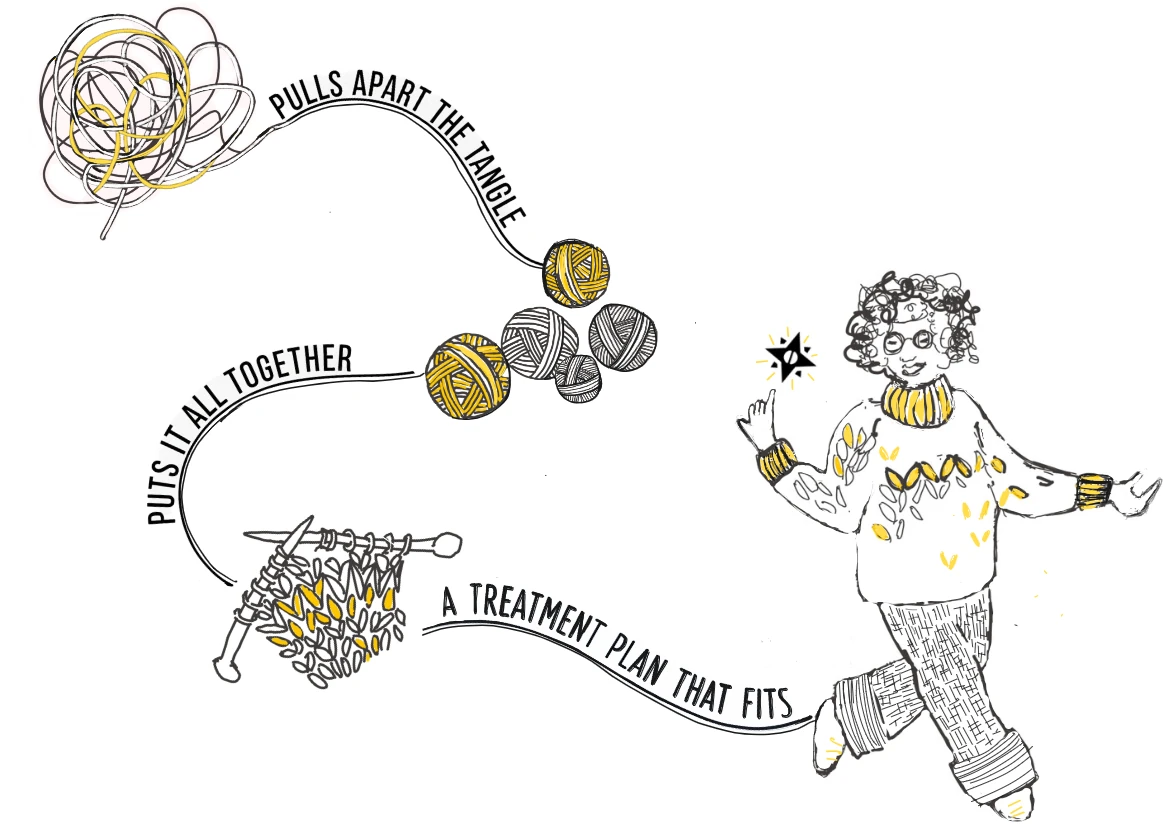
You have followed the advice and done the right things. Something still isn’t right.
Maybe you have been through a lot of changes and no one has ever looked at the whole picture.
Maybe the internet forums are doing your head in and you just want more time to ask proper questions about your medications.
Maybe you are exhausted and just need someone to sit with you and explain.
Without adding more noise.
No referral needed. Contact us directly – or ask your doctor to refer you.
Who this is for
This service is for people with ADHD, autism and mental health conditions – and their families and carers. You do not need a referral. You can come directly.
“The decision still sits with us – but now we actually understand what we’re deciding.”
A parent – shared with permission
About this service
01 – Who is this for? ADHD, autism and mental health – patients, families, carers
If you or someone you care for has ADHD, autism or a mental health condition and medication is part of the picture – or might be – this service is for you.
You might be at the start of a medication journey and want to understand your options. You might have been through a lot of changes and want someone to look at the whole picture. You might have questions your doctor hasn’t had time to answer properly. You might want support for a family member, or need help getting everyone on the same page.
No referral needed. No hospital system. No waiting for the right appointment to come around.
02 – What does Penny actually do? The work – in plain language
Penny is a Pharmacist Consultant. She does not prescribe or diagnose – that stays with your treating team. What she does is look at everything around the medication: how it moves through your body, what else is affecting it, what the evidence actually says, what is missing from the current plan, and whether the whole thing fits your life.
The work happens in sessions with you, behind the scenes, or both – whatever the situation needs. In sessions she translates what she finds into language that makes sense, works through your questions, and helps you understand what you are actually deciding. Behind-the-scenes work – reviewing records, applying her clinical framework, coordinating with your team – is agreed in advance and billed separately.
She works alongside your treating team where possible, and always with your goals at the centre. Everything she does is documented – and shared with whoever needs it, with your consent.
Depending on the work, you may receive:
Legacy Report
Everything that has been tried – when, what doses, what happened, which prescribers were involved, what the records say and what you remember – pulled together into one clear document.
You do not need to have the records or remember everything. With your consent, Penny requests records from previous care providers, pharmacies, My Health Record and your current team. She compiles everything, then works through it with you to capture your recollection and get the record straight.
Where something did not work, Penny works out why.
Then you and your team have a clean, accurate picture to move forward with. You never have to tell your full story from scratch again.
Medication Portrait™
A forward-facing document designed to travel with you. It captures who you are in the context of your medication care – your history, what your risks are, what to watch for, and a guide for any you and any clinician when changing treatment in the future.
03 – Why Penny? Experience, recognition, independence
Experience: 20+ years in frontline specialist multidisciplinary teams – working with the complex medication problems
Expertise recognition: A Pharmacist Consultant in both Mental Health and Paediatrics – one of only two in Australia to hold dual recognition at this level, and the only one in private practice. View credential | FANZCAP (MentalHlth, Paeds) →
Independent: No hospital system. No pharmaceutical ties. No outcome-linked funding. Penny’s recommendations are shaped only by your situation and the evidence.
Why your medication plan is not one size fits all
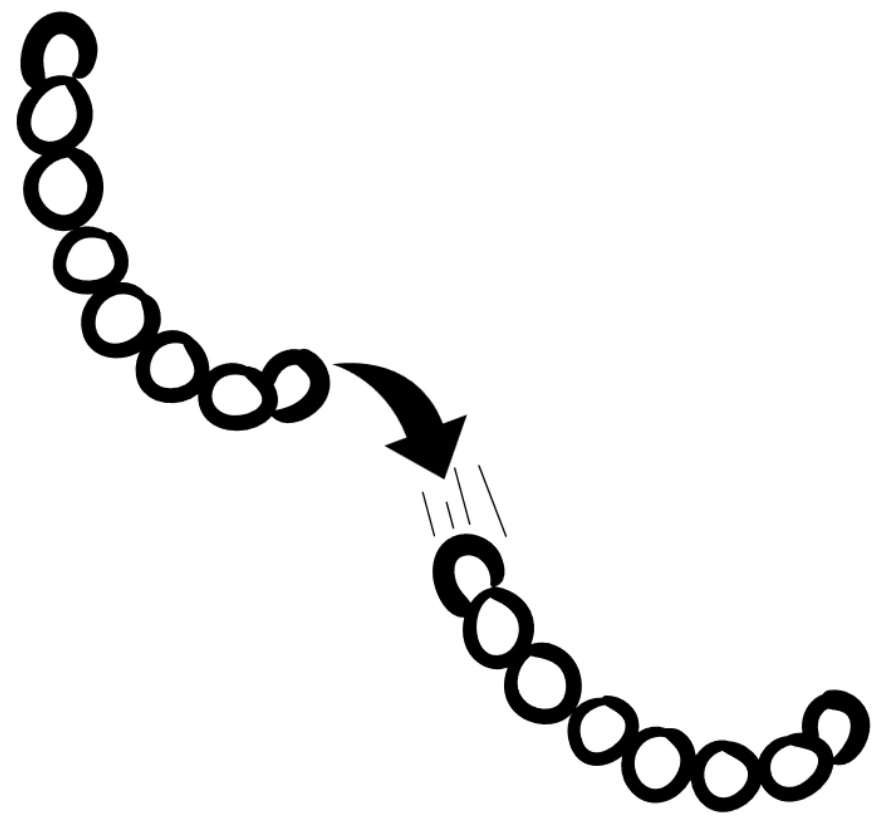

Medication plans are like a chain – only as effective as its weakest link. Every step in the treatment chain matters. The fix for one person is completely different for the next.
To get the most out of medication, a lot needs to line up.
The dose not too high or too low. ✓ Navigating each step of a complicated system. ✓ Remembering to take your tablet ✓ – but not twice. ✗
So many things can go wrong before treatment can go right.
But any one of them can break the chain – obvious or subtle – and finding it takes someone who knows just where to look.
Penny finds the hidden breaks.
And works to fix them.
Some of the reasons people come
Every situation is different. Here are some of the things people bring to Penny.
How to get started
Whether it is a specific question, a brainstorm about your situation, an education session about a medication, a complex situation where you are in a tangle and do not know where to start – or your doctor has referred you – this is where you begin. Start with one conversation. Everything else follows from there.
Start here
30-minute video call
$250
Good for a specific question or if you are not sure where to start
OR
One hour · video call or in person
$440
Good if you want more time to unpack what’s happening
Leave with at least one clear next step. For some it answers everything outright. For others it is where the work begins.
No referral needed
After that, three paths – and you choose. You don’t need to know which one before you book – the initial consultation is where Penny will talk you through what options might best suit your needs and budget.
Path 1All done (for now)Sometimes the initial consultation is enoughNo further cost
You have clarity, you have the information you wanted, you have a next step, and you know what to do. Come back any time things change.
Path 2Sessions, behind-the-scenes work, or bothTailored to you – every step agreed in advance – nothing happening without your knowledge.*$440/hr
For specific questions, situations that have changed, or ongoing support. Tailored to each person. Every step agreed in advance.*
Sessions – 60 or 90 minutes – in person or video call
- Understanding what has been recommended and why – translating what your treating team is thinking
- Talking through your fears and worries about medication – honestly, without being rushed
- Understanding the risks of treating – and the risks of not treating
- How the medication is actually meant to work in your body and your life
- Making sense of a complicated history – what was tried before, and why
- Problem-solving when something is not working
- Meeting with people important to you – a partner, parent, carer, family member, or a group
- Any questions welcomed. Nothing too weird.
Behind-the-scenes work
- Reviewing your records, clinical letters and reports
- Applying the MEDWISE™ framework – seven dimensions, every patient, every time What is MEDWISE™? ↓
- Writing clinical reports and summaries
- Coordinating with your prescriber, GP, treating team or school
- Supply navigation – PBS, Special Access Scheme, medication shortages
If having those conversations with your doctor feels hard right now, Penny can help you work out what to say and how to say it – and work with you over time to feel more confident having them yourself.
*People come to Penny when things are complicated. That is the nature of this work. Estimates are always based on careful assessment and experience with similar situations – but complexity sometimes reveals itself once the work begins. Where behind-the-scenes work looks like it will exceed the original estimate by more than 20%, Penny will stop, let you know, and agree on next steps before continuing. Nothing unexpected will be charged without your knowledge and agreement.
The same principle works the other way. Where a situation turns out to be simpler than anticipated and less time is needed than estimated, the difference is refunded.
Path 3Maxwell Minds Intensives™Packages to ensure you are fully supported through end to end chapters of care.POA
For situations that need more than a session or two – or a body of work that is behind the scenes, face to face, or a combination of both. A structured package of support through a defined chapter of your medication journey.
- Untangling what is happening now and why
- Clarifying your goals and priorities
- Exploring all available options – including when you are beyond the standard guidelines
- Getting everything in place to start or change treatment
- Planned check-ins after starting
- Getting the people around you on the same page
- Involving your treating team or the important people in your life – wherever that helps
Final pricing depends on complexity and scope – agreed before any work begins.*
Second time around intensives are generally less – when your full history and individual plan have already been developed, the groundwork is done.
In development – expressions of interest welcome now.
*People come to Penny when things are complicated. That is the nature of this work. Estimates are always based on careful assessment and experience with similar situations – but complexity sometimes reveals itself once the work begins. Where work looks like it will exceed the original estimate by more than 20%, Penny will stop, let you know, and agree on next steps before continuing. Nothing unexpected will be charged without your knowledge and agreement. The same principle works the other way. Where a situation turns out to be simpler than anticipated and less time is needed than estimated, the difference is refunded.
WorkshopsComing soonTell us what would be useful
Your child has just been diagnosed with ADHD – now what? Further workshops on topics relevant to patients, families and carers. Get in touch to register your interest or suggest a topic.
Maxwell Minds is a private service. Not currently funded by Medicare or the NDIS. All fees agreed before any work begins. Simplicity refund applies.
Lily’s Story
A process illustration – a detailed look at what a Maxwell Minds engagement can look like – see below for some other stories of why people come see Penny.
About this process illustration
Lily is not a real person. Her story is based on the kinds of situations Maxwell Minds works with and illustrates what work with Penny can look like.
Lily is a child in this story, but the issues she and her family face are also faced by adult patients. This story is not about any specific medication or treatment outcome – Australian law prevents discussion of treatment outcomes in this context. What it describes is the process: the information gathering, the education, the collaboration and the support. When Penny works with you directly, she can discuss specific treatments in full.
Quotes are from real people, used with permission. They describe their experience of the process only – not clinical outcomes.
All prescribing decisions remain between the treating clinician and the patient or carer. Maxwell Minds does not prescribe or diagnose.
What this illustrates
A family navigating a long and complex medication history – and what working through it together looked like.
This illustrates what a Maxwell Minds engagement can involve: how information is gathered, how it is brought together into a usable picture, what education sessions cover, and how Penny works alongside families and treating teams. Every situation is different. This is one example of the process – not a template for what will happen, and not a description of any clinical outcome.
01IntakeThe family contacts Penny directly
They had followed the advice. They had done what was recommended – and sometimes they hadn’t. But something still was not right. Lily was struggling at school and her family were unsure whether medication was the right path at all. They contacted Penny directly, described a long and complicated medication history across several prescribers, and asked for help understanding their situation and their options.
No referral needed.
“We want to understand the role medication might play.”
Lily’s parents – describing what they were hoping for from the engagement
02GatherSession 1 – listening to the whole story
Online video session. Penny spends time gathering the full picture: diagnoses, goals, sensory profile, sleep, gut history, every medication that has been tried, family medical and medication history, and the family’s lived experience of what has happened so far. This is not a quick intake form – it is a proper, unhurried conversation about everything that is relevant.
“You’re the first person to really look at it as a whole. No one else has done this.”
Lily’s mum – describing her experience of the first session
This describes the experience of the information-gathering process, not a clinical assessment or outcome.
03GatherReading the records
With family consent, Penny reviews school reports, psychometric assessments, occupational therapy notes and GP correspondence. The aim is to document what has been observed across different settings, what has been tried, and what the people around Lily have recorded about her experience. Records often contain things families have forgotten – or were never told.
“Everyone is walking on eggshells.”
School principal’s letter – describing the environment at the time
04CollaborateConnecting with the treating team
With family consent, Penny makes contact with Lily’s current GP and new paediatrician – not to share conclusions, but to make sure everyone involved is working from the same starting point. She introduces herself, explains the scope of the work, and requests any previous correspondence and clinical records that would help build the complete picture.
One of the most common problems in complex situations is that no single clinician holds the complete story. This step is about closing that gap. It often happens alongside the information gathering rather than after it – and it ends with a commitment to share a comprehensive written synthesis once the work is complete.
05DocumentBringing everything into one place
Everything gathered – diagnoses, clinical alerts, every medication ever tried with dates and context, body systems, family history, school context – is brought into a single structured document. Every prior medication trial is recorded with the circumstances in which it happened: the dose, the duration, who prescribed it, what was recorded about the response, and what the family remembers.
This is the beginning of what Penny calls the Legacy Report – a full, documented, interpreted account of the medication history so far.
The goal is not just to list what was tried. It is to document it in enough detail that a future clinician – or this family, years from now – can read it and understand what actually happened, rather than starting from scratch.
06EducateSession 2 – making sense of what was tried before
Each previous medication is explained in plain language: what it does, how it works in the body, and what factors specific to this family’s history are relevant to understanding the full picture. The session is about education and information – helping the family understand their own story more clearly. All prescribing decisions remain between the treating clinician and the patient or carer.
“No one had explained the medications in this way before – now we understand the full picture of what was tried and why.”
Lily’s dad – describing the experience of the education session
This describes the experience of receiving medication education, not a clinical assessment or outcome.
07EducateEducation on a specific medication – what it does, what to watch for
A specific medication relevant to Lily’s situation is explained in context: how it works, what the published evidence says about its use for this kind of presentation, and what the monitoring considerations are for this family specifically. The family receives written information they can use for future reference.
“Here is what it does. Here is what to watch for.”
From Penny’s written summary to the family – describing the purpose of the education provided
08PlanA written summary for the family and the treating team
A structured written summary is prepared in two formats: plain language for the family, and clinical format for the paediatrician and GP. This is also where the Medication Portrait takes shape – a forward-facing document that captures who Lily is as a person in the context of her medication care: her history, her family’s understanding, what they have been taught, what to watch for, and a guide for any clinician who treats her in the future. It is designed to travel with her.
“You’ve explained the information we needed to make sense of what was being proposed – and what to be aware of.”
Lily’s parents – describing the written summary process
This describes the experience of receiving and understanding information. All prescribing decisions remain between the treating clinician and the patient or carer.
09SupportAvailable as things evolve
The family can return at any point – if a new medication is proposed, if questions come up, if school changes, or simply to revisit what was covered with someone who already holds the full picture. The Medication Portrait can be updated as Lily’s situation evolves. It is not a finished document – it is a living record that grows with her.
“The decision still sits with us – but now we actually understand what we’re deciding.”
Lily’s mum – describing the experience of the informed consent process
How I think – the MEDWISE™ framework
Seven dimensions, applied to every engagement, every time. This is the clinical framework Penny brings to the work behind the scenes.
M – E – D – W – I – S – E | Seven dimensions. Every patient. Every time.
M Movement – how this medication moves through your specific body. What is changing absorption, metabolism and excretion for you.
E Evidence – what the research actually says – including where it is uncertain or does not apply to the person in front of her.
D Drug interactions – with other medications, conditions, genes and lifestyle factors.
W What’s missing – the monitoring not in place. The coordination gap. The practical support you are not getting.
I Individual fit – treatment shaped around your body, your history, your values, your practical life.
S Safety – how to start, what to watch for, when and how to adjust, and how to stop or change safely.
E Efficiency – the most elegant solution for this situation. Reducing wasted time and unnecessary complexity.
MEDWISE™ is Penny’s clinical framework.
Patient FAQ
Questions about what to expect, how sessions work, what behind-the-scenes work means, and more.
When you are ready the first step is an introductory session